Skip to content
 Limestone and sandstone share the same geological origin: both are natural sedimentary rocks formed over millions of years through the compaction of sediments. This characteristic gives them a unique texture and great versatility, making them highly valued materials in architecture and construction.
Both natural limestone and sandstone have been used since antiquity as building and ornamental materials. Great historic monuments demonstrate their durability and architectural value. Well-known examples are Burgos Cathedral, built mainly with limestone, and the pyramids of Egypt, where limestone was one of the leading materials.
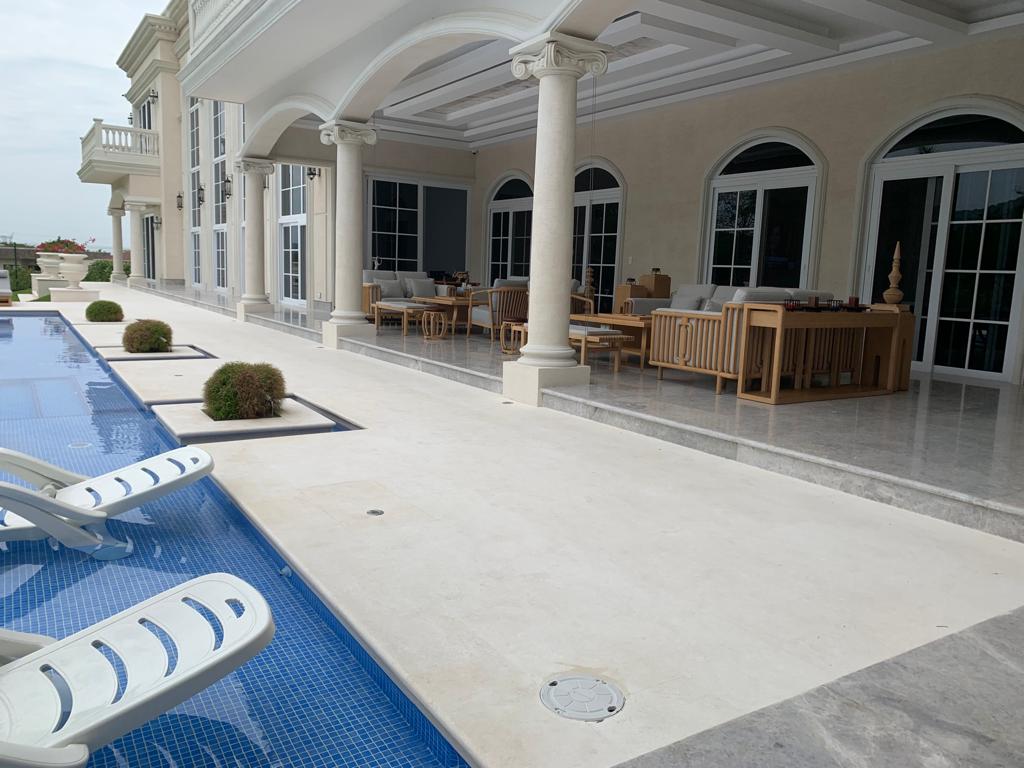
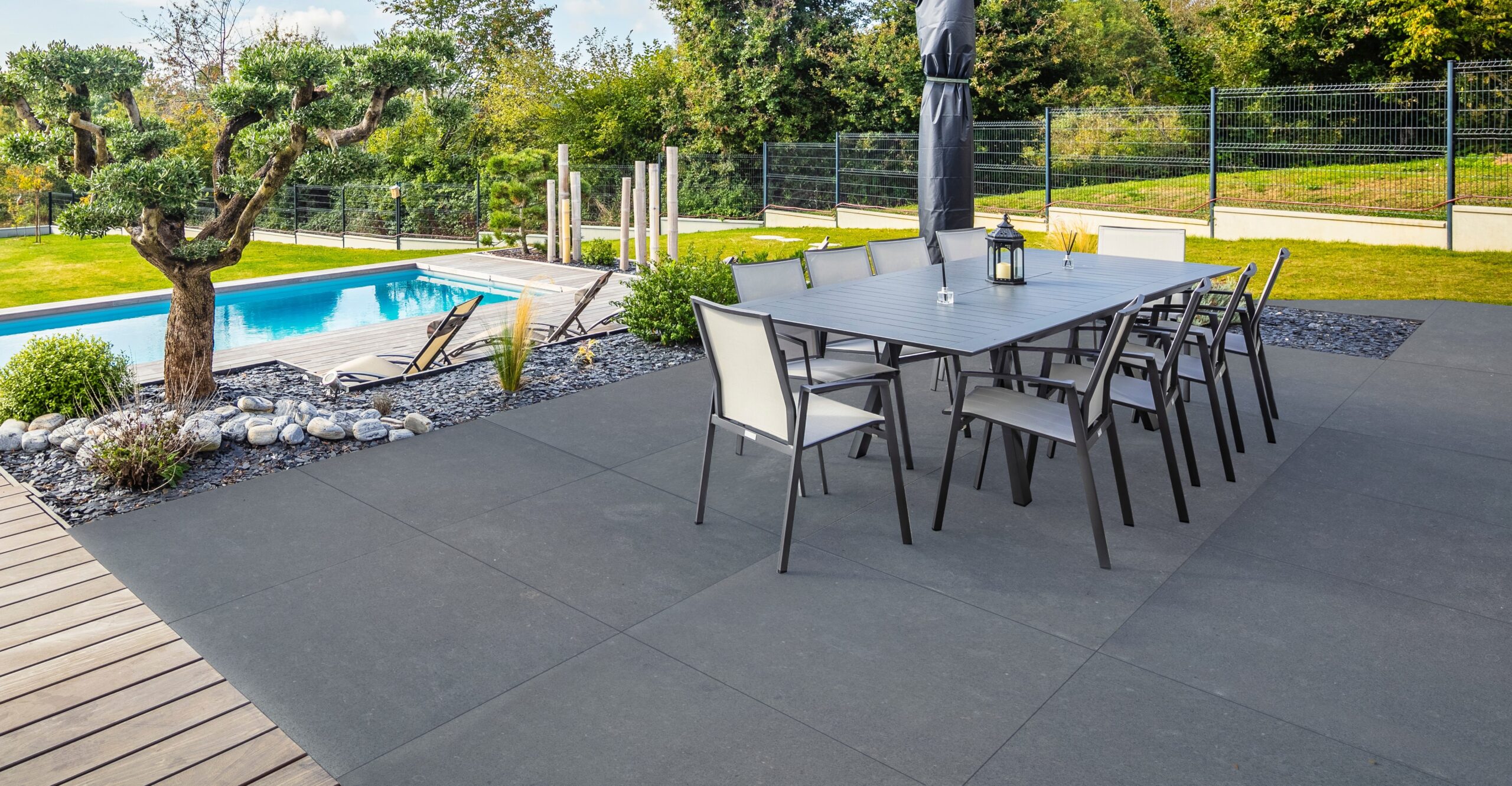
Today, limestone and sandstone remain widely used materials in architecture and interior design projects thanks to their strength, natural beauty and ability to integrate into different architectural styles. Their texture, tone and timeless character make it possible to create elegant, durable spaces on façades, cladding, floors and decorative elements alike.
The personality of limestone and sandstone is determined by the proportion of their components. In the case of limestone, it is made up of less than 50% terrigenous material — crystals, rock fragments and fossils. As for sandstone, terrigenous components exceed 50%, which is why we classify it within the group of detrital rocks.
It is worth noting that sandstone is a porous rock and, depending on the size of the fragments that make it up and their distribution, the degree of permeability varies. Therefore, the fewer empty spaces there are between one grain and another, the lower the permeability.
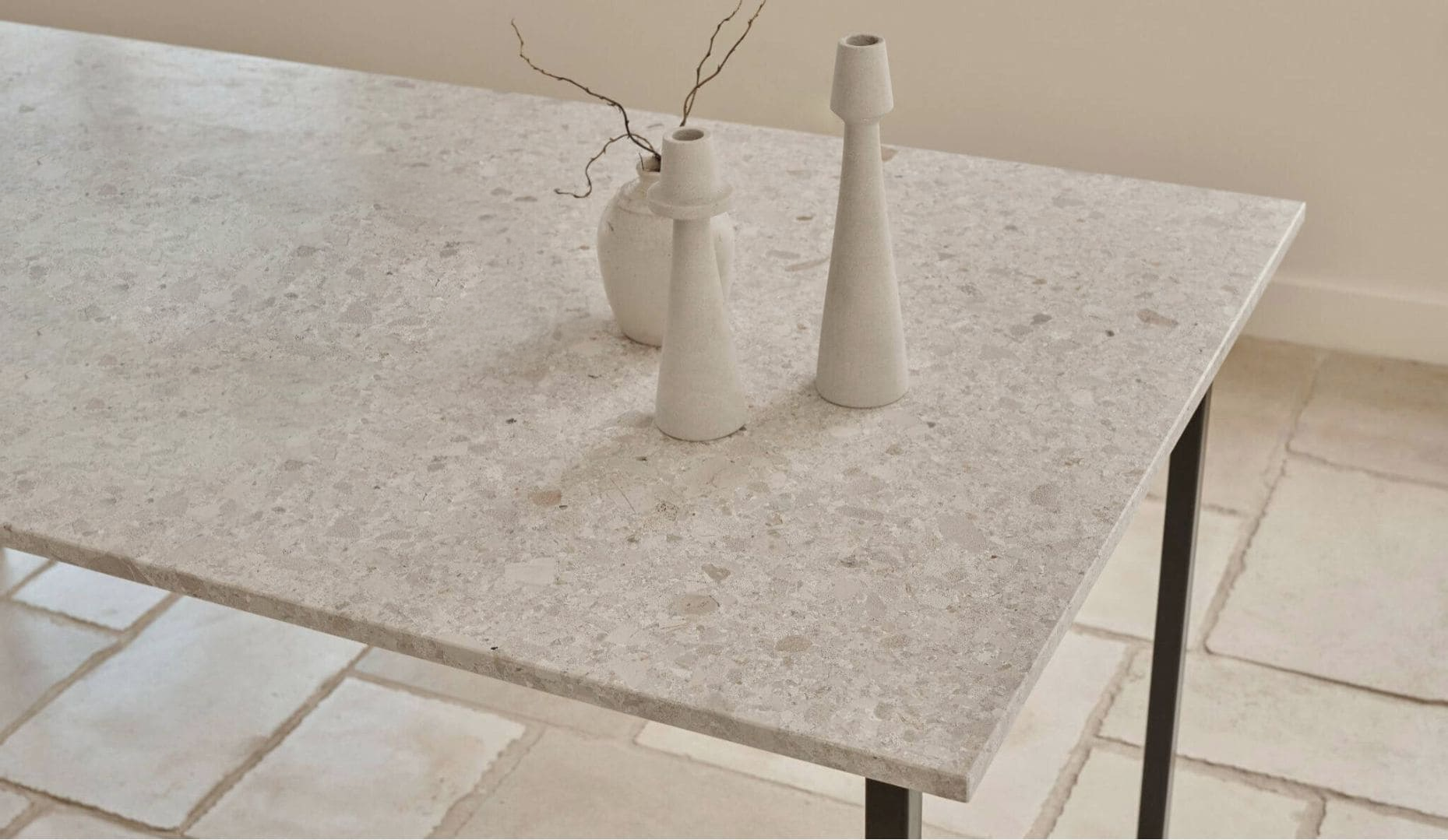
Each finish offers a different look, adapting to any architectural or decorative style.
You can now buy marble in our online shop easily and securely.
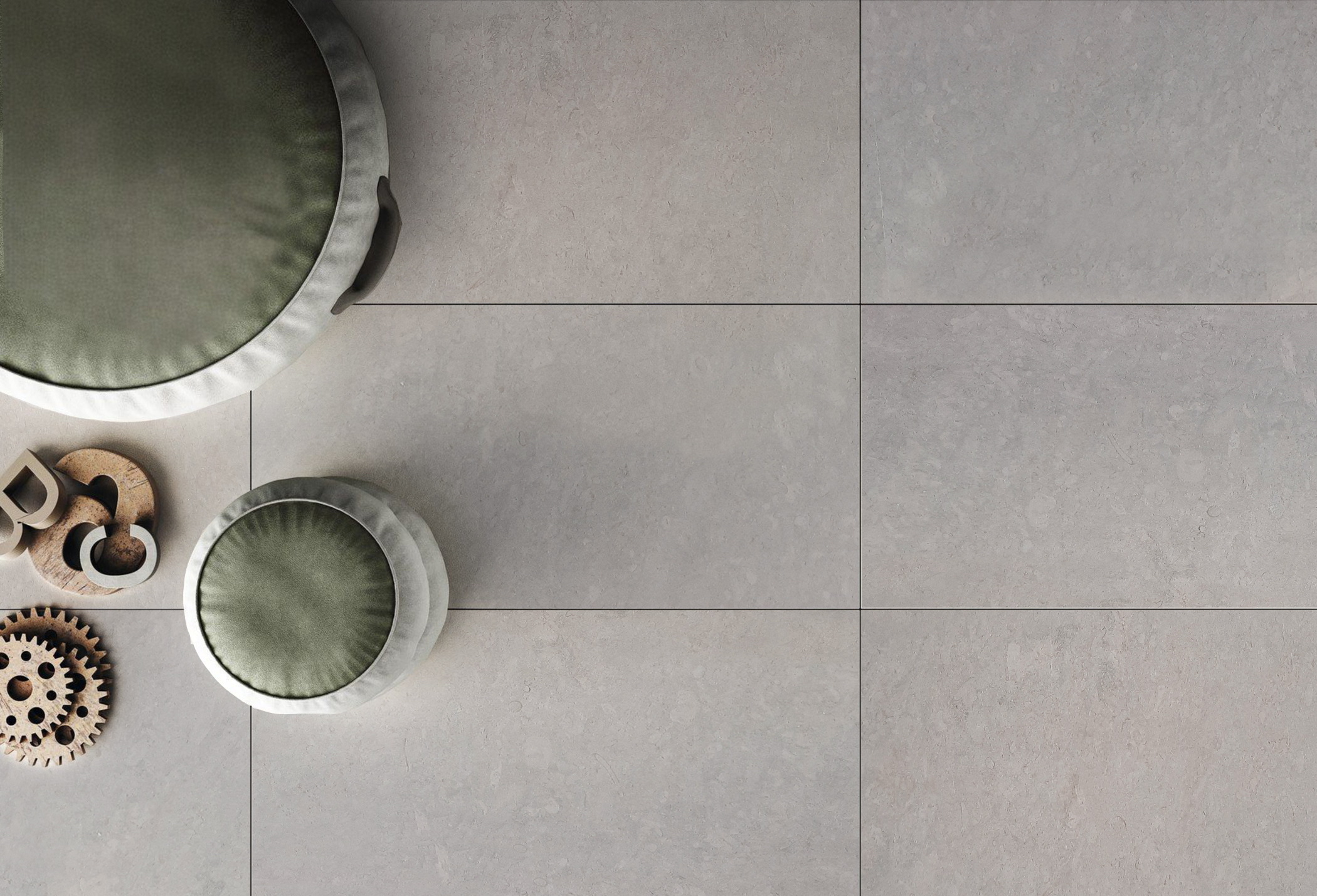
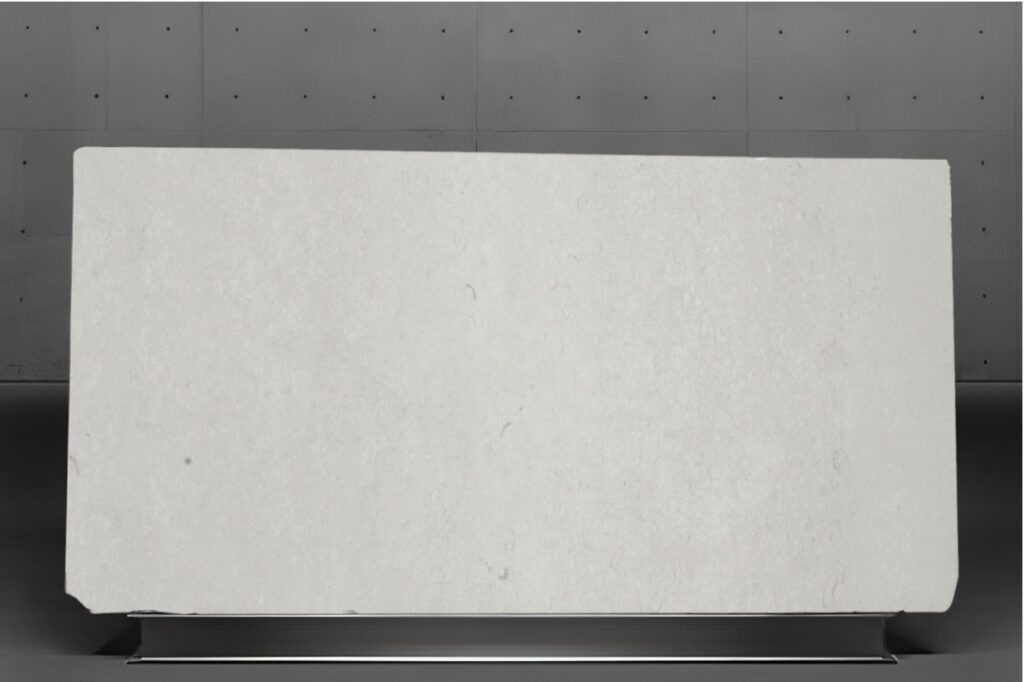
We present slab formats of 2 cm, 3 cm and special thicknesses, as well as tiles in multiple dimensions for any project.
100×100 cm
80×80 cm
60×40 cm
45,7×45,7 cm
40×40 cm
2400x1400x20 mm
We create realistic photomontages so you can see how your design will look in Limestone and Sandstone.
NEWS
We answer the most common questions about limestone and natural sandstone: differences, uses, durability, finishes and quotes for architecture and construction projects.
Limestone and sandstone are sedimentary rocks, but they differ in composition, texture and visual appearance. Limestone usually offers a more uniform, elegant aesthetic, while sandstone stands out for its natural texture and its warm, architectural character.
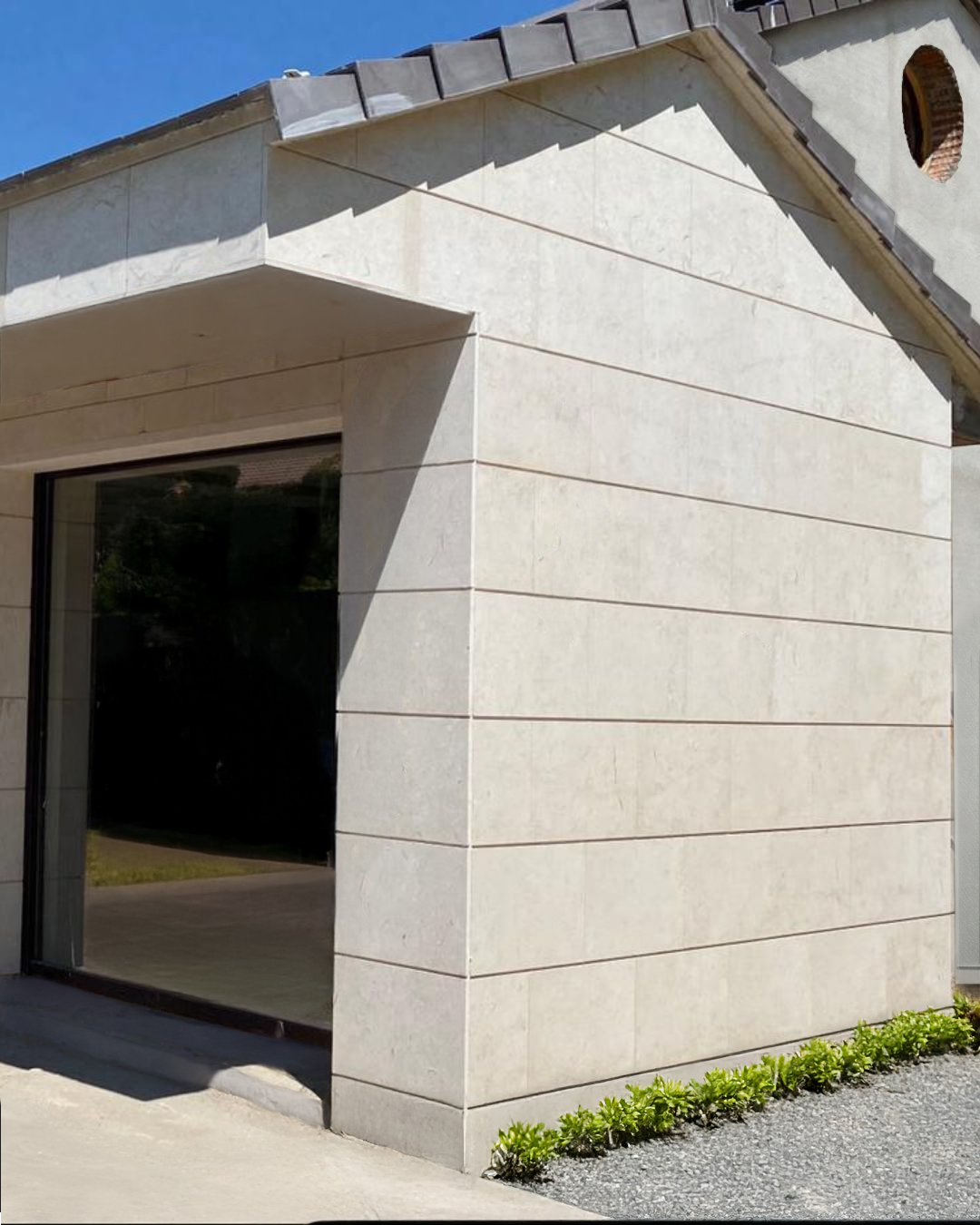
Natural limestone is used on façades, floors, cladding, staircases, walls and decorative elements. It is a material highly valued in architecture projects for its timeless beauty, its versatility and its ability to integrate into classic and contemporary designs.
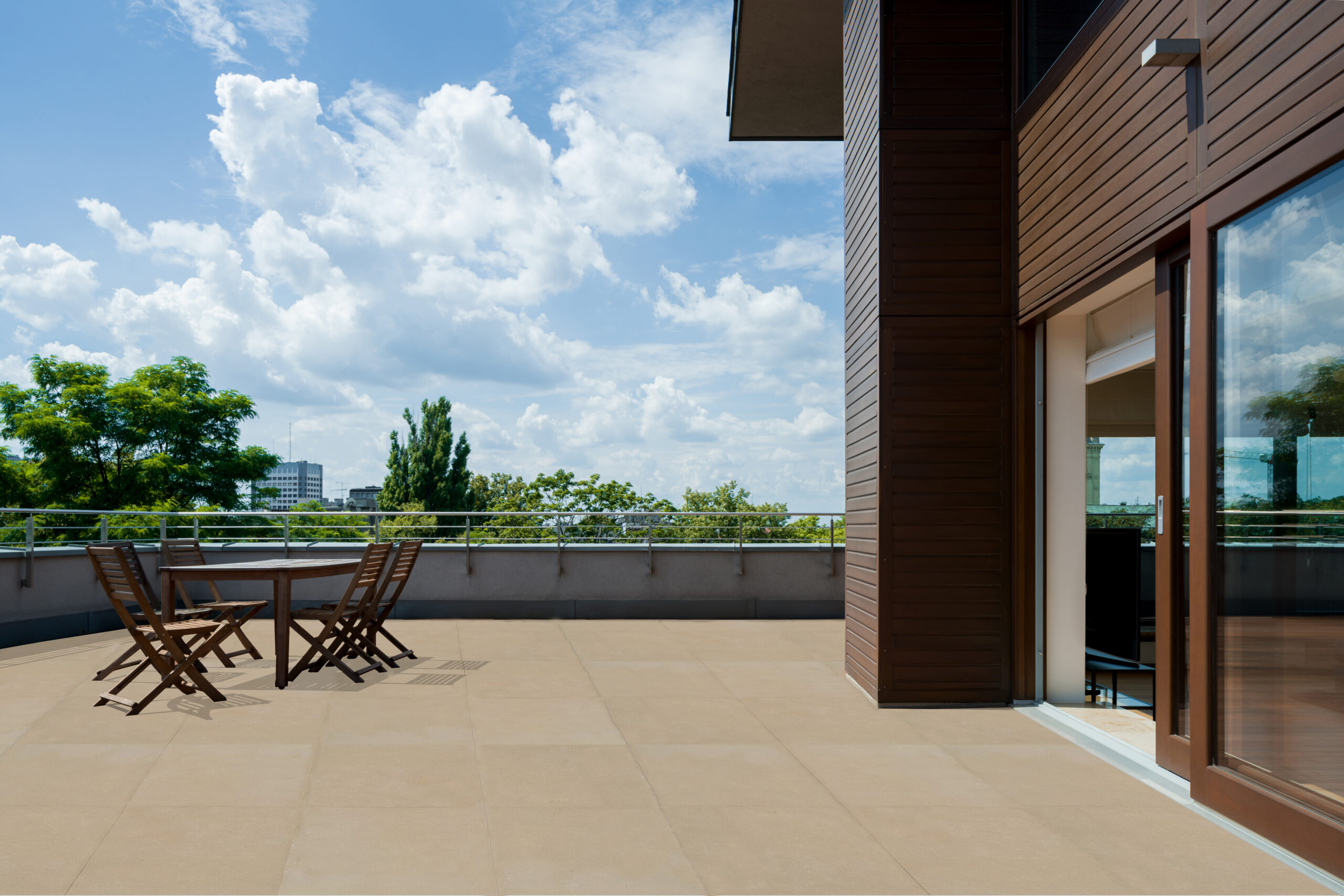
Sandstone is especially recommended for façades, flooring, exterior cladding, courtyards and projects seeking a natural aesthetic. Its texture and tone make it a very attractive option for residential, hospitality and landscape architecture.
Yes, both limestone and natural sandstone can be used outdoors when the right material is chosen and the correct finish is applied. They are common materials on façades and flooring for their strength and excellent performance in construction and architecture projects.
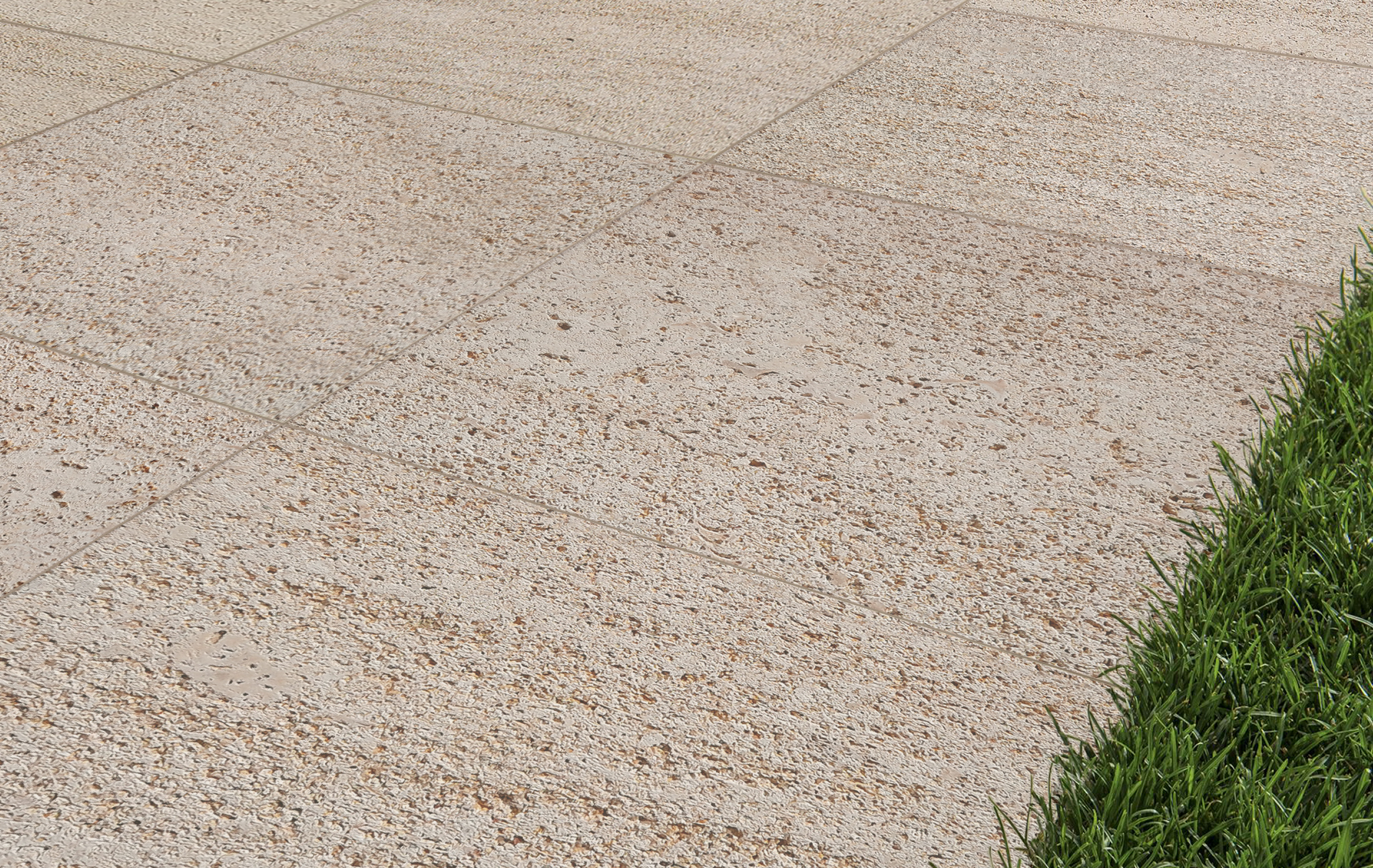
Limestone and sandstone can be worked with different finishes depending on use and the desired aesthetic result:
Natural limestone offers an elegant aesthetic, very versatile tones and a great ability to adapt to high-value architectural projects. It is a timeless, durable material highly appreciated for façades, floors and cladding.
Natural sandstone stands out for its texture, its organic appearance and its ability to bring warmth to spaces. It is a stone widely used in outdoor architecture and landscaping, especially on façades, flooring and common areas with a natural, sophisticated approach.
To keep limestone and sandstone in good condition, we recommend cleaning with neutral products, avoiding acids and applying protection according to the area of use. On outdoor or high-traffic surfaces, a suitable treatment helps preserve their appearance and durability.
The price of limestone or sandstone depends on the type of material, format, thickness, finish, order volume and manufacturing complexity. Special cuts, edges, logistics and the planned type of installation also have an influence.
With this information we can better assess your project:
Looking for limestone or natural sandstone for your project? Contact Pulycort and we'll advise you.