

Since antiquity, marble has been the ultimate symbol of nobility and durability in architecture. From the temples of Classical Greece to Renaissance palaces, this natural stone has shown that it is not only a building material but a form of art in itself.
Today, marble remains the preferred choice for architects and interior designers who want to give their projects a unique personality. In this complete guide, we explore in depth what marble is, which varieties are most prized and how you can bring it into your home to raise its aesthetic and functional value.
What is marble and why does it remain a trend?
Marble is a metamorphic rock formed from limestone which, subjected to high temperatures and pressures deep within the earth, reaches a high degree of crystallisation. This geological process is responsible for its characteristic veining, which is simply mineral impurities that have been “drawn” in capricious patterns over millennia.
Main characteristics of this natural stone
- Exclusivity: No two pieces of marble are alike. Every slab extracted from the quarry is a one-of-a-kind work of art.
- Durability: With proper maintenance, marble can last for centuries.
- Thermal resistance: It is an excellent material for warm climates, as it stays cool to the touch.
- Versatility of finishes: It can be polished (glossy), honed (matt), tumbled or bush-hammered.
If you are thinking of renovating your spaces, you can explore our wide selection of marble to find the shade that best suits your style.
The marble types most used in architecture and interior design
The range of colours and textures in marble is almost endless. Depending on their geographical origin and mineral composition, we can classify them into broad groups.
1. White marbles: brightness and purity
White is marble’s signature colour. It gives an unrivalled sense of cleanliness and spaciousness.
- Blanco Carrara: Originating in Italy, it is famous for its greyish-white background and fine veining.
- Blanco Macael: The Spanish gem from Almería, known for its purity and medium grain.
- Blanco Statuario: Highly valued for its thicker, bolder veining on an icy white background.

2. Crema Marfil marble: the king of the classics
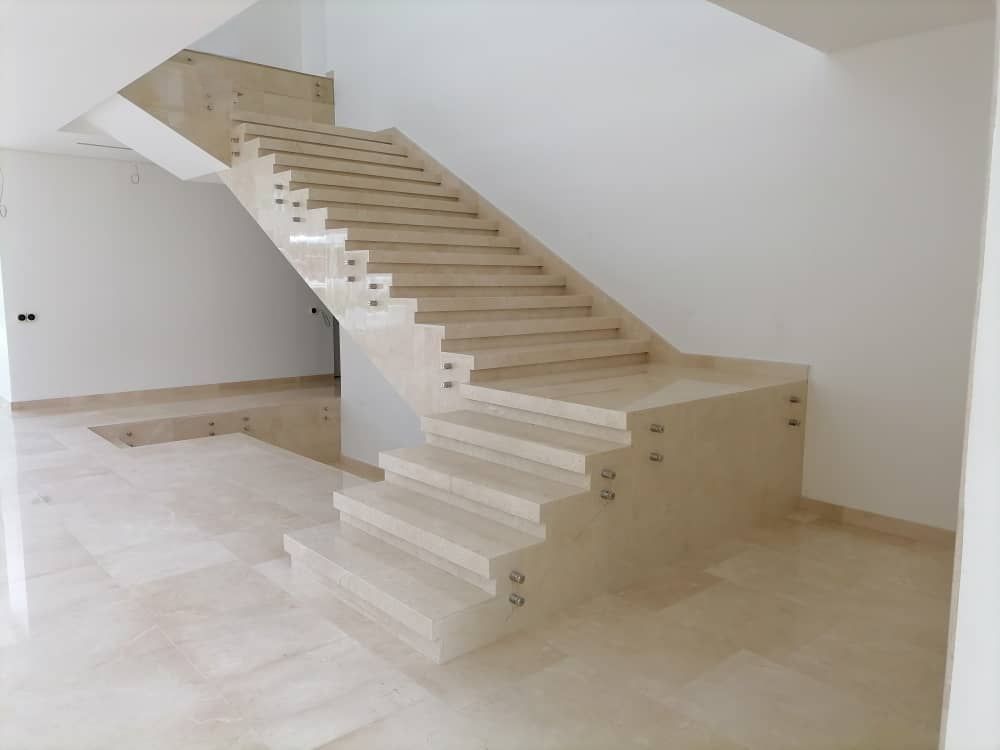
Crema Marfil is, without doubt, one of the most widely exported marbles in the world. Its warm beige tone and uniformity make it ideal for flooring across large areas. It combines perfectly with other materials such as wood or metal, making it a safe choice for any style of decor.
3. Dark marbles: sophistication and contrast
For those seeking strong visual impact, dark marbles are the best option.
- Negro Marquina: With its deep black background and irregular white veining, it is synonymous with luxury.
- Marrón Emperador: A Spanish classic with brown tones and light veining that bring warmth and elegance.
4. Grey and coloured marbles
Gris Pulpis or Rojo Alicante are options for those who want to step away from the traditional and add a touch of colour and distinction to countertops or accent walls.
Applications of marble in the home
Thanks to its strength and beauty, marble is used in a variety of rooms in the home, each with a different purpose.
Marble floors: floors that tell stories
A marble floor completely changes how a room is perceived. In living rooms and entrance halls, the polished finish reflects light, visually doubling the space. It is important to choose the right format (60×60, 60×30 tiles or large formats) to minimise joints and create a continuous surface.
Marble in the bathroom: a private spa
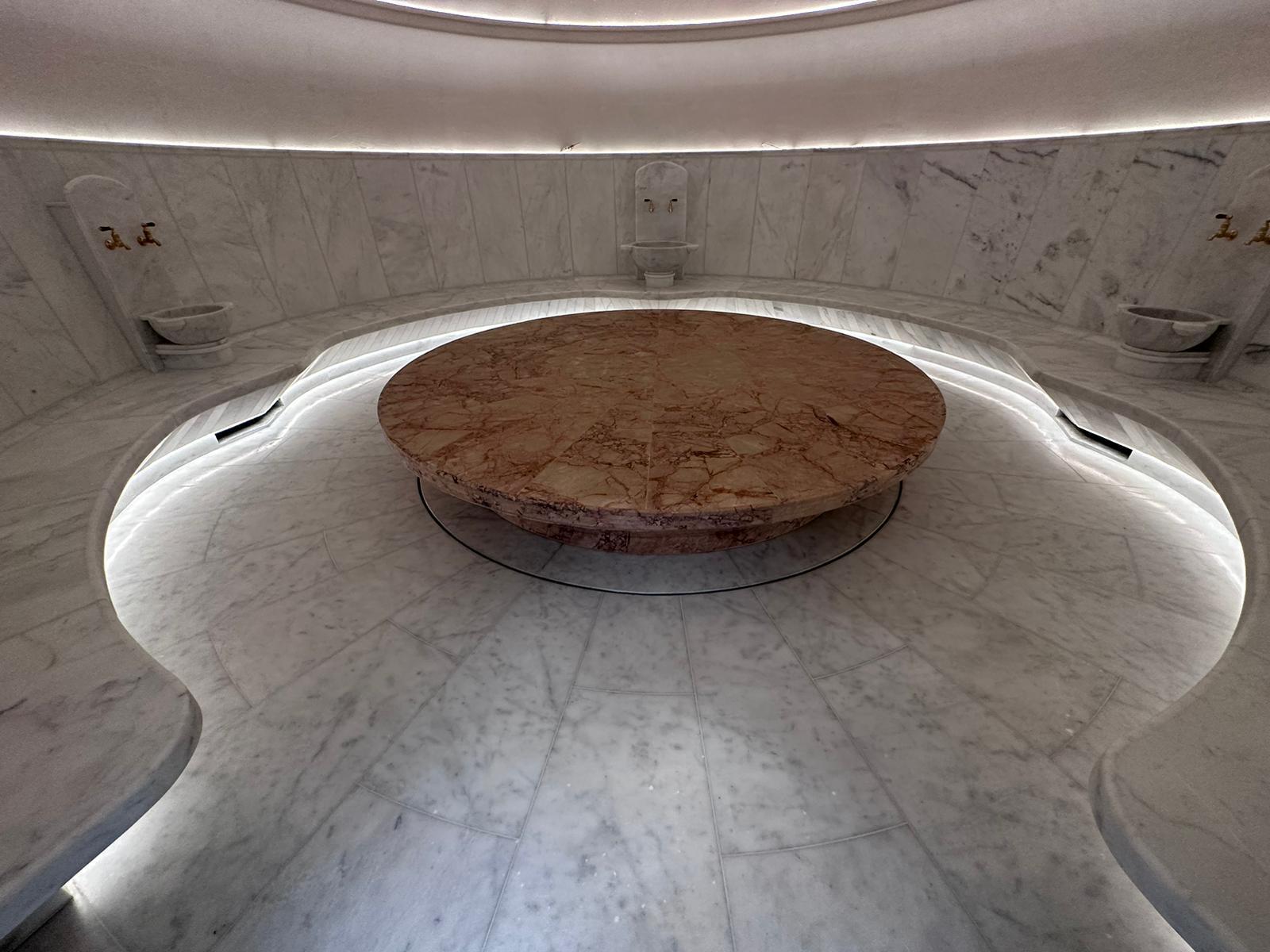
The bathroom is where marble truly shines. Whether on the wall cladding, the shower tray or the basin, its resistance to moisture makes it ideal. White marble in the bathroom conveys a sense of hygiene and serenity that is hard to achieve with other materials.
Countertops and kitchens
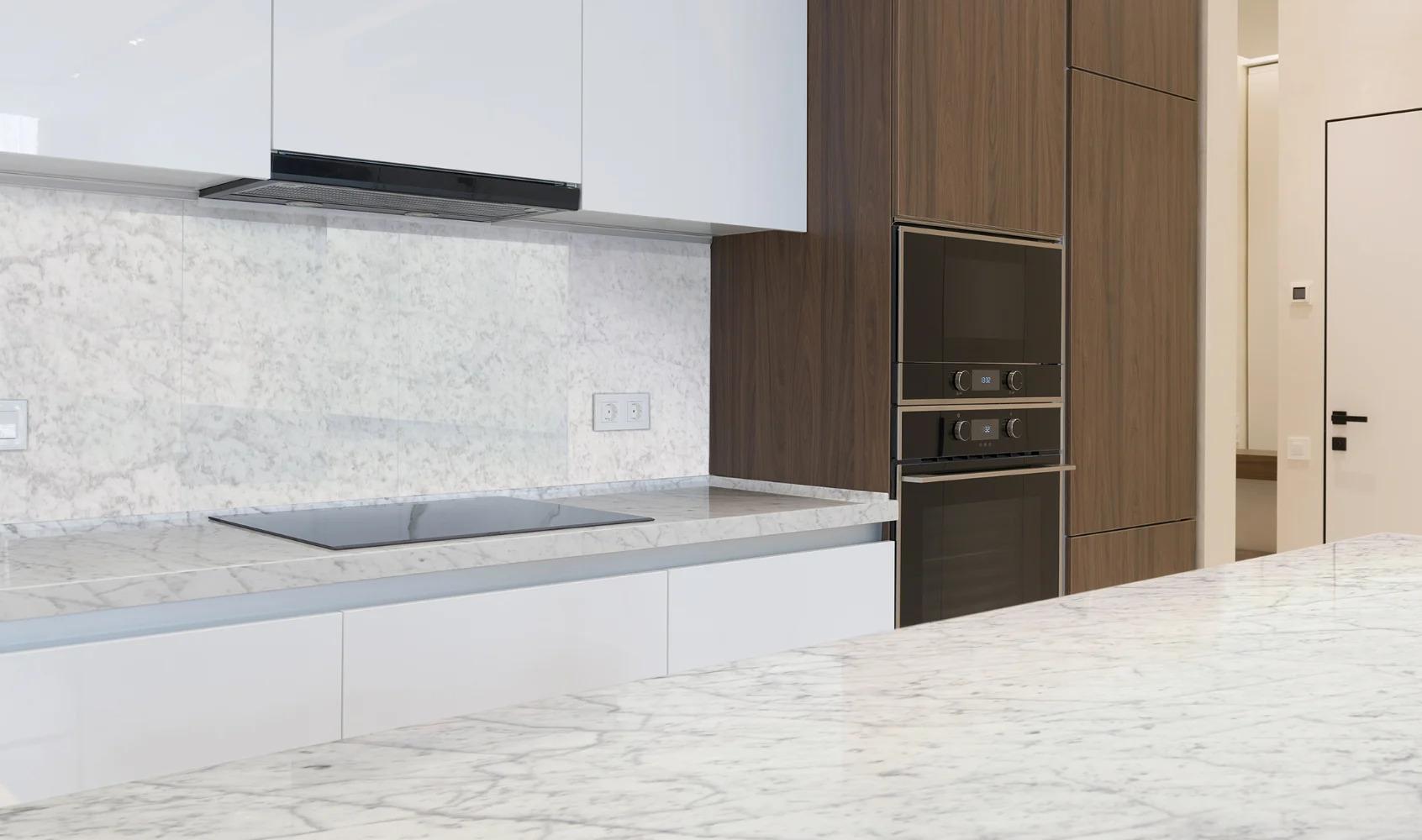
Although marble needs more care than granite when it comes to acids (such as lemon or vinegar), it can also be used in designer kitchens. Many chefs prefer marble for working pastry dough because of its naturally low temperature.
How to choose the right finish for your project
The finish affects not only the aesthetics but also the functionality of the material.
- Polished: The most common. It brings out the colours and veining, giving a mirror-like shine. Ideal for interiors.
- Honed: Gives a smooth, matt surface with no reflections. It is a trend in minimalist and modern designs.
- Tumbled: Through mechanical or chemical treatments, the marble is given a rough texture that imitates the passage of time. Ideal for rustic settings.
- Bush-hammered: Creates a rough, non-slip surface, perfect for outdoors or pool areas.
Maintenance and care: how to keep marble glossy
One of the myths about marble is that it is extremely difficult to maintain. Although it is a porous stone, by following a few basic tips it will look as good as the day it was installed:
- ✓ Daily cleaning: Use water and a pH-neutral soap. Avoid bleach, ammonia and acidic products at all costs, as they can “burn” the shine of the marble.
- ✓ Stain protection: On countertops or heavily used floors, we recommend applying a water-repellent treatment once a year. This seals the pores and stops liquids penetrating.
- ✓ Dealing with spills: If wine, coffee or oil is spilled, blot it up immediately with absorbent paper, without rubbing, to stop the stain spreading.
Sustainability and the value of the natural
In a world increasingly dominated by synthetic materials and plastics, choosing marble is a vote for sustainability. It is a 100% natural product, and its extraction and processing require less polluting processes than the manufacture of ceramic or resin-based materials. Marble is also recyclable and has a very low carbon footprint compared with other luxury building materials.
A material for life: Marble is an investment in durability. Its longevity reduces the need for replacement, making it an environmentally responsible choice.
Why buy marble from Pulycort?
At Pulycort, we have spent decades working directly with the finest quarries. Our experience allows us to select the highest-quality blocks and turn them into unique pieces that will dress your home.
We control the whole process: from extraction and cutting through to the final polish and delivery to your door. This allows us to guarantee not only the best price but also superior quality and technical advice you will not find at a big-box retailer.
Advantages of trusting us:
- ✓ Variety: Wide stock of all kinds of domestic and international marbles.
- ✓ Customisation: We cut to size to suit the needs of your project.
- ✓ Logistics: We ship the material with maximum protection so that it arrives intact.
Conclusion: a lifetime investment
Marble is not an expense, it is an investment. By installing marble in your home, you are not only enjoying its beauty every day but also increasing the market value of the property. Its elegance is timeless; it never goes out of fashion.
Whether you are after the minimalism of a white marble, the warmth of a cream or the drama of a black, natural marble has the power to transform any ordinary space into an extraordinary one.
🛒 Ready to transform your home with the elegance of marble?
Don’t leave your project in just anyone’s hands. Visit our online shop and discover the exclusivity of our natural stones.