

The bathroom is one of the spaces where the choice of material has the greatest impact, both visually and functionally. A poorly chosen surface can deteriorate within a few years; a well-chosen one can last decades without losing its appearance. Natural marble remains the benchmark in quality interior design projects, but not all marbles behave the same way in a damp environment, and not every format suits every type of bathroom.
In this guide we explain the technical and aesthetic criteria to consider before choosing marble for your bathroom, with direct references to the varieties available in the Pulycort catalogue.
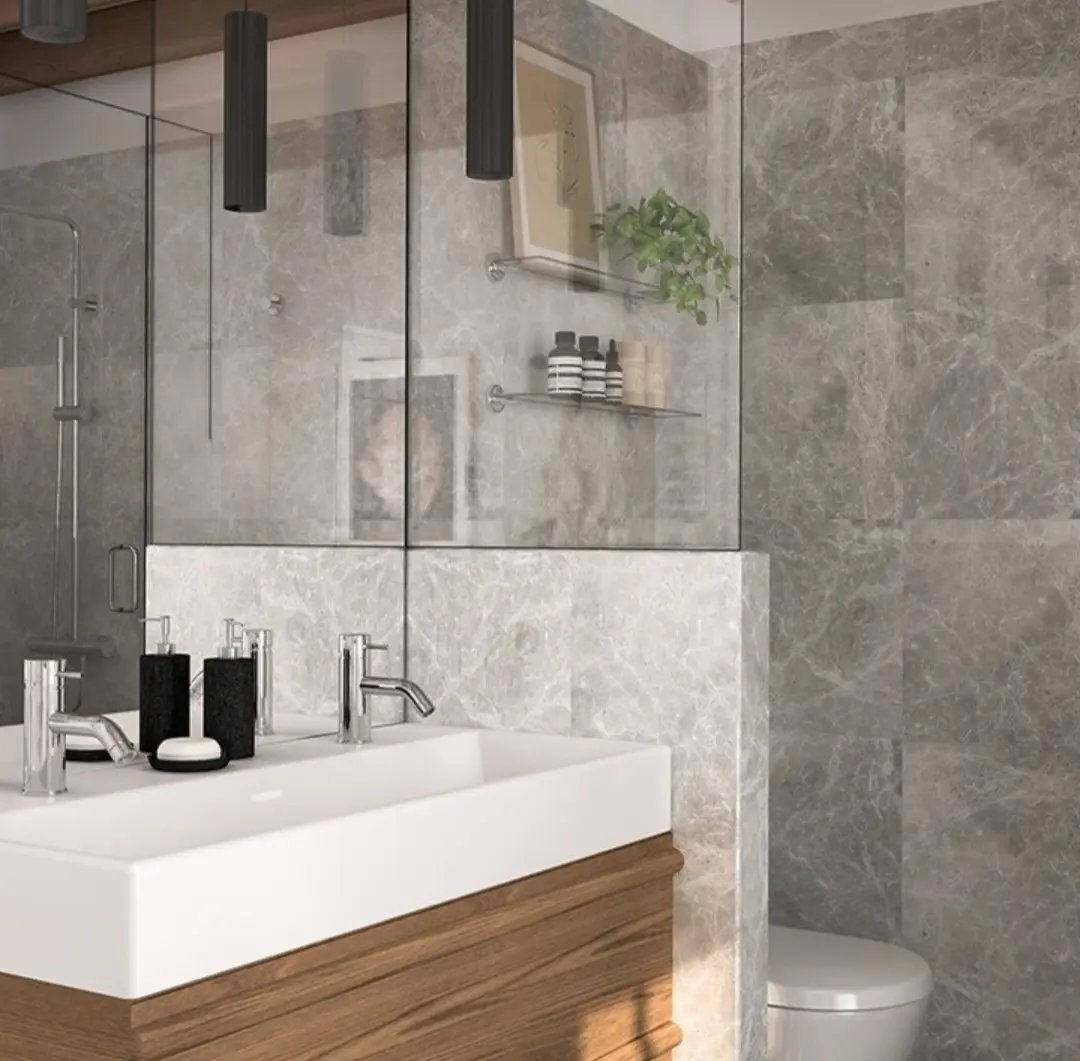
Why marble is a good choice for the bathroom
Natural marble has properties that make it especially well suited to damp environments when it is treated and installed correctly. It is an inert material, meaning it does not release volatile compounds into the room. Once sealed, its surface is resistant to moisture and easy to clean. And its density makes it considerably more stable under temperature changes than many man-made materials.
Beyond the technical properties, marble offers something no porcelain can faithfully replicate: visual continuity. Its veining flows from piece to piece, creating an almost seamless surface that makes bathrooms look more spacious, more refined and more timeless.
The key is choosing the right variety, the right finish and a format in proportion to the space.
Key factors when choosing marble for a bathroom
1. The variety: colour, veining and visual character
The first decision is aesthetic, but it is also functional. Each marble variety has a different mineral composition that determines its porosity, hardness and behaviour when exposed to water.
| Variety | Tone | Veining | Recommended bathroom use | Price from |
|---|---|---|---|---|
| Crema Marfil | Warm beige | Soft, irregular | Floors, walls, countertops | €59/m² |
| Carrara | Pure white | Grey, delicate | Walls, countertops, showers | €108/m² |
| Negro Marquina | Deep black | White, pronounced | Wall cladding, floors | €99/m² |
| Blanco Goya | Soft white | Subtle | Minimalist bathrooms and showers | €108/m² |
| Blanco Marmara | Pure Turkish white | Very fine | Luxury bathrooms, countertops | €108/m² |
| Pietra Grey | Dark grey | White, contrasting | Contemporary design | €133/m² |
| Tundra Grey | Soft grey | Natural, understated | Modern, serene bathrooms | €130/m² |
The choice of tone also has a direct effect on how a space is perceived. White and beige marbles — Carrara, Crema Marfil, Blanco Goya — amplify light and make small bathrooms feel larger. Greys and blacks — Pietra Grey, Negro Marquina — add character and depth, but work best in bathrooms with good natural or artificial lighting. If the aim is a bathroom with its own personality without giving up brightness, Tundra Grey is a well-balanced middle ground that is popular in current projects.
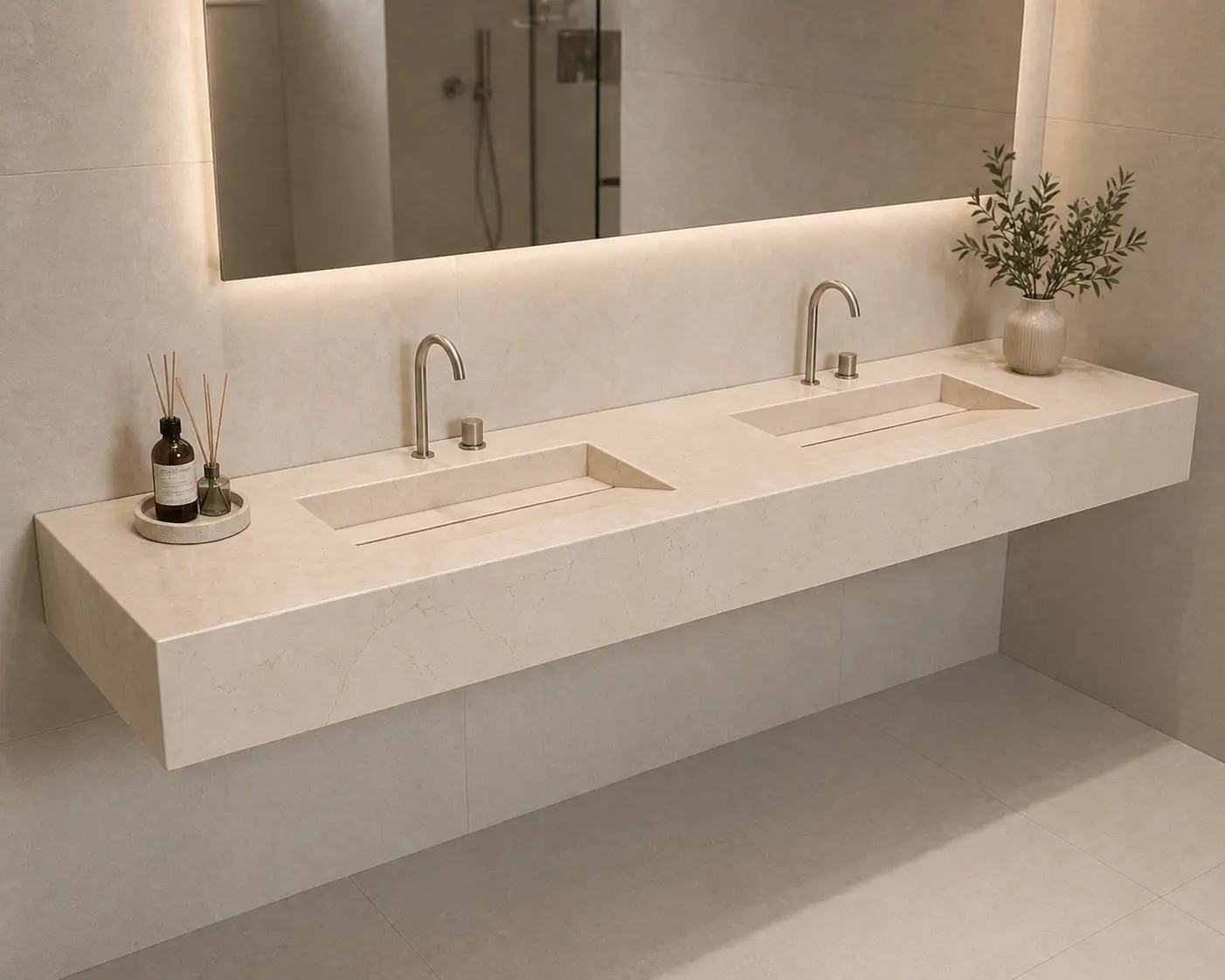
2. The finish: the most important decision for a bathroom
The surface finish is probably the most critical technical factor when choosing marble for a bathroom. It determines both the look and the day-to-day practical behaviour of the material.
Polished finish. The most widely used finish indoors. It gives a glossy surface that brings out the colour and veining of the marble to the full. In bathrooms, it is the preferred finish for walls, countertops and shower areas, where visual effect is the priority. Its main limitation is that on heavily used floors it can show scratches over time. We recommend sealing it properly at installation.
Honed or matt finish. It reduces the shine and gives a more contemporary, understated look. It hides fingerprints, water and everyday marks better, which makes it especially suitable for bathroom floors in busy households. It takes nothing away from the beauty of the marble — it simply shifts its visual register towards something calmer and more modern.
Satin or semi-polished finish. A middle ground between the two: it keeps some of the shine but with less reflection than a full polish. It is a good option when you want a bright bathroom without the mirror effect of a fully polished surface.
Rule of thumb: for bathroom floors, choose a matt or honed finish. For walls and countertops, polished gives the best visual result. For walk-in showers, consult your installer on the most suitable finish to ensure slip resistance.
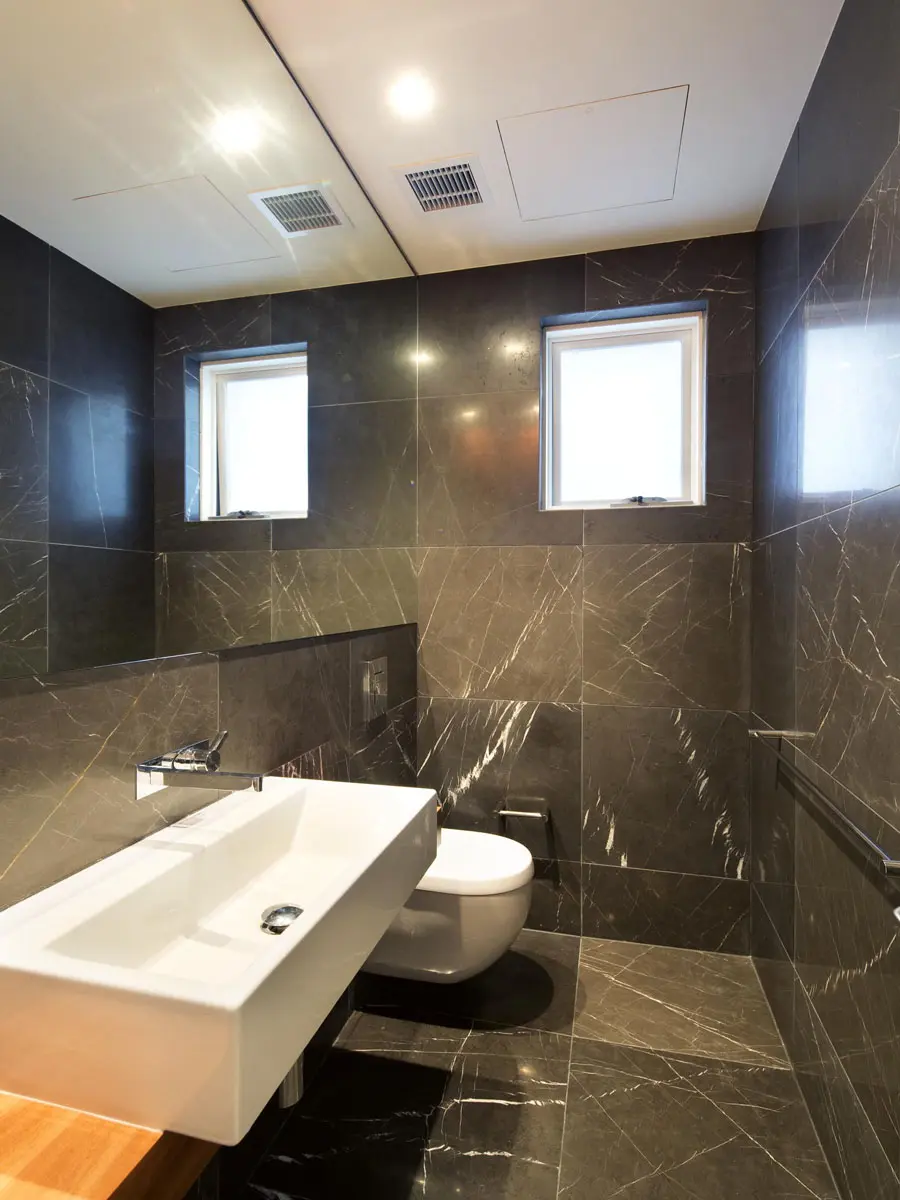
3. The format: in proportion to the space
The size of the slab or tile directly affects the final result in the bathroom. A piece that is too large in a small bathroom can make the space feel cramped; a piece that is too small in a large bathroom loses its visual potential.
- Small bathrooms (under 6 m²). Medium formats of 40×40 cm or 40×60 cm are the most suitable. They are easier to install in spaces with many corners and reduce material waste. On walls, vertical formats visually lengthen the space.
- Medium bathrooms (6–12 m²). Formats of 60×60 cm or 60×120 cm work very well. They allow the marble’s veining to develop more broadly and reduce the number of visible joints.
- Large bathrooms and suites (over 12 m²). Large formats — from 80×80 cm or 60×120 cm — are the natural choice. The veining flows from one piece to the next, creating the seamless-surface effect that characterises high-end bathroom design.
4. The thickness: strength and application
The standard thickness for interior bathrooms is 2 cm, enough for floors and cladding in normal domestic use. For countertops or vessel basins that will bear weight and heavy use, a thickness of 3 cm offers greater resistance to bending and reduces the risk of fracture.
With underfloor heating, check with your installer: some systems require specific thicknesses to ensure heat is transmitted properly through the stone.
The best marble varieties for each type of bathroom
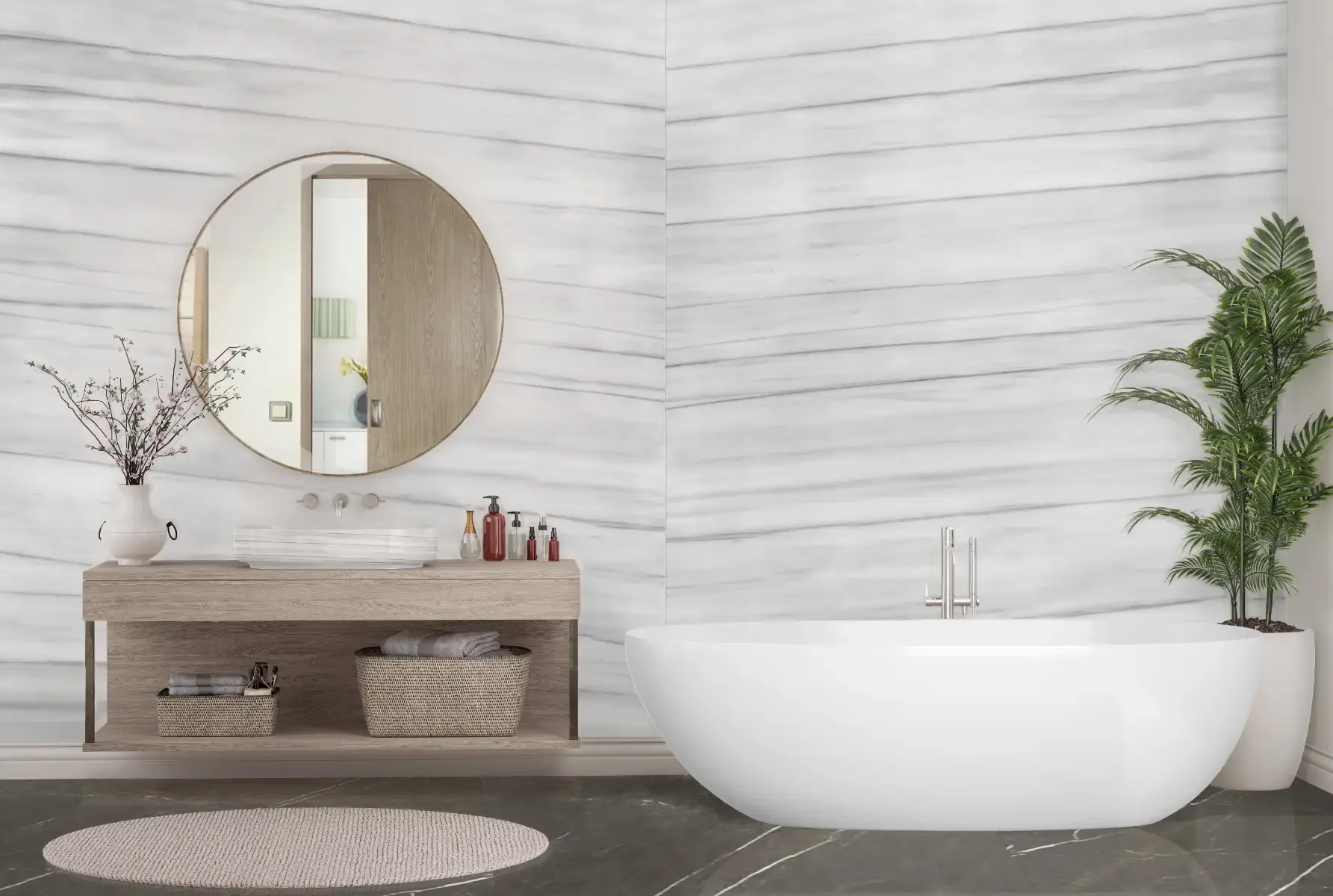
Classic, timeless bathroom
If the aim is a bathroom that never goes out of style, Crema Marfil and Carrara are the two historic benchmarks. Crema Marfil brings warmth and understated elegance — it is the best-selling marble in Spain precisely because it works in almost any context. Carrara is cooler and brighter, with a pure white that turns any bathroom into a high-end space.
Both work perfectly with a polished finish on the walls and a honed finish on the floor, which is the most aesthetically balanced combination.
Contemporary, designer bathroom
For projects with a more current look, greys take centre stage. Pietra Grey has a strongly contrasting vein pattern that makes it a favourite of architects and interior designers seeking visual impact. Tundra Grey is calmer, with a more delicate vein movement, ideal for bathrooms where serenity and sophistication are the values to convey.
High-impact, luxury bathroom
Negro Marquina on shower walls or behind a designer basin creates a presence few materials can match. Its white veining on a black background creates a contrast that works especially well with matt black or gold taps and fittings. Blanco Marmara is another option for luxury projects: its exceptional purity and almost invisible veining create a sense of cleanliness and sophistication that is hard to achieve with other varieties.
Maintaining marble in the bathroom
One of the most common questions when choosing marble for the bathroom is maintenance. The honest answer is that marble in a well-installed, properly sealed bathroom requires minimal maintenance:
- ✓ Regular cleaning with water and a pH-neutral soap — no acids, no bleach, no abrasive products.
- ✓ Initial sealing at the time of installation and re-checking the seal every 2–3 years depending on use.
- ✓ Drying standing water on floors, especially in shower areas without a screen.
- ✓ Avoiding prolonged contact with acidic cosmetic products — some perfumes, lotions and cleaning products can stain if left on the surface.
With these basic precautions, a well-executed marble bathroom keeps its appearance for decades.
What to ask before you buy
Before placing your order, make sure you have answers to four questions:
- ✓ Is the marble for a floor or a wall? The finish changes depending on the application.
- ✓ What is the total area, including waste? Always add 10–15% to the actual square metres to allow for cuts and breakages.
- ✓ Is there underfloor heating? Tell your installer before choosing the thickness.
- ✓ Have you seen a physical sample? Marble varies between batches — seeing the actual piece before committing is always the best decision.
Find the marble for your bathroom at Pulycort
At Pulycort we work with more than 13 varieties of natural marble available in different formats, thicknesses and finishes. We supply directly from source, which allows us to guarantee the quality of the material and offer the best terms on price to private customers, architecture practices, interior designers and developers alike.
You can browse the full catalogue of marble for bathrooms and wall cladding, request free samples with no obligation, or contact our team for personalised advice on your project. We reply as quickly as possible and support you from selecting the material through to delivery on site.
If you need guidance on which variety best suits your bathroom project, our team can advise you with no obligation.