

Sustainability is no longer an optional criterion in architecture; it has become a requirement of the market, of regulation and of conscience. In that context, natural marble, historically associated with luxury and aesthetics, deserves an honest review through the lens of sustainability. If you are looking for information on marble, quality and the environment, you will find a clear and rigorous analysis here.
The conclusion is more favourable than many people expect. Architects, developers and private individuals taking on construction or renovation projects are increasingly building environmental criteria into their choice of materials. Marble meets those criteria remarkably well, especially when compared with the artificial materials that compete with it on the market.
In this guide we look at what marble is, whether it is a natural or an artificial material, how it behaves over its life cycle, what role it plays in today’s architecture and why its natural texture is an advantage in both aesthetic and environmental terms. We also explain the relationship between marble quality and its impact on the environment, so you can choose with confidence.
What Is Marble? A Natural Stone Material
Marble is a metamorphic rock made up mainly of calcite or dolomite. Its formation takes millions of years of pressure and heat deep within the earth’s crust. That slow transformation gives it its crystalline structure, its characteristic sheen and the veining that makes every block unique.
As a building and decorative material, marble has been used since Antiquity in temples, sculptures, floors and cladding. Today it remains one of the benchmark materials in high-end residential, commercial and institutional projects.
Is Marble Natural or Artificial?
One of the most common questions is whether marble is natural or artificial. The answer is clear: marble is a natural stone. It originates from the metamorphism of limestone or dolostone, which recrystallises under high pressure and temperature over millions of years to form its characteristic structure.
This sets it apart from artificial materials such as engineered quartz, porcelain or synthetic surfaces, which are manufactured industrially by combining aggregates, resins and pigments. There is also so-called agglomerated or composite marble, made from fragments of natural marble bound together with resins, but it should not be confused with natural marble in block or slab form.
- Natural marble: quarried from the ground, with no chemical synthesis in its formation, and with unique veining and tones in every piece.
- Artificial materials: made through industrial processes, with binders and additives, and with a more uniform appearance.
How to Tell Natural Marble from Artificial
To tell whether a material is natural marble, look for several signs: the veining does not repeat identically from piece to piece, the texture is crystalline and the surface shows the tonal variations typical of stone. In artificial materials, the pattern tends to repeat and the colour is more uniform.
What We Mean by Sustainable Marble
The sustainability of a building material cannot be measured by its extraction process alone. A rigorous assessment must cover the material’s entire life cycle: extraction, processing, transport, installation, use and end of life. This is known as life cycle assessment (LCA), and it is the methodology used by environmental certification systems in construction such as LEED, BREEAM or VERDE.
From that standpoint, when we talk about sustainable marble we mean a material that minimises its impact at each of those stages: extracted using techniques that reduce rock waste, processed with energy-efficient methods, transported over the shortest possible distance, installed without toxic adhesives, and able to last for decades without needing replacement or treatment with harsh chemicals.
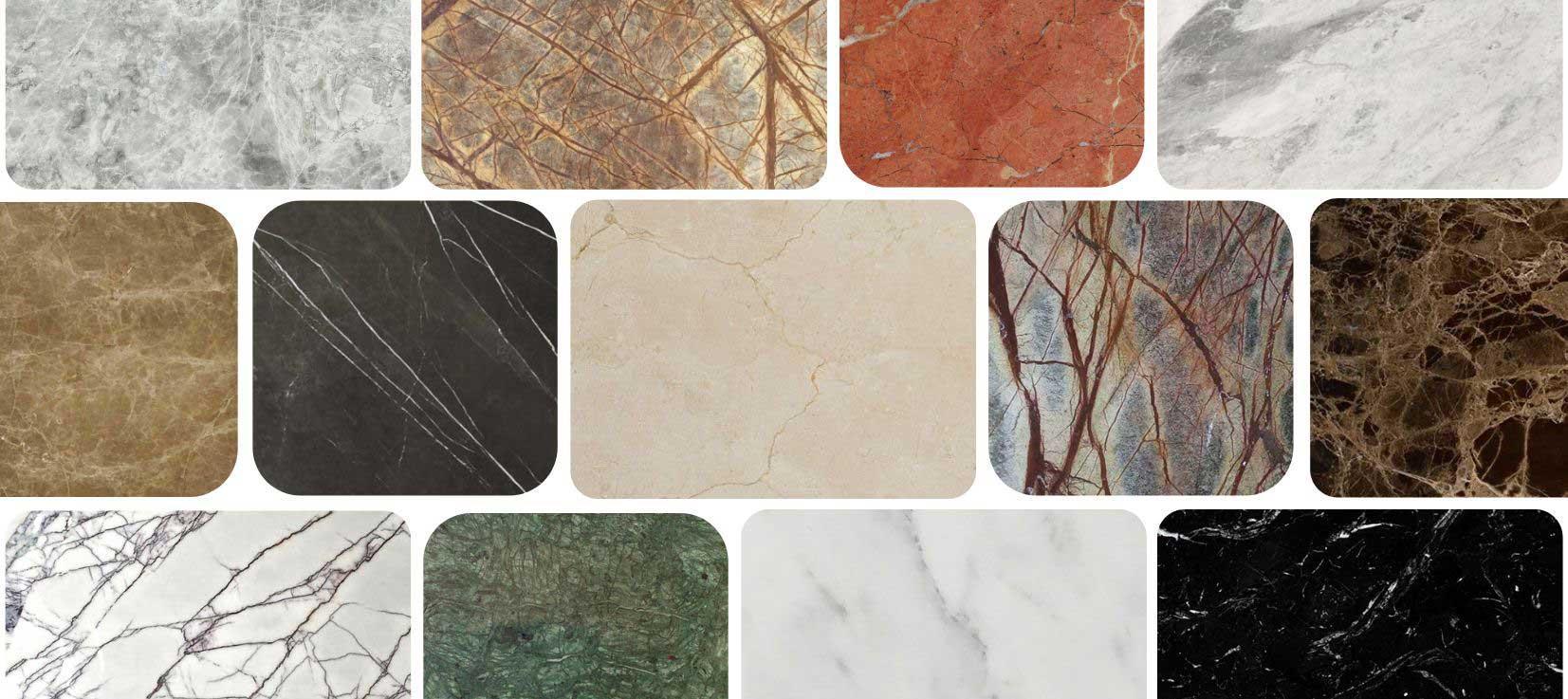
Marble, Quality and the Environment
Quality and sustainability go hand in hand in natural stone. A good-quality marble, well selected and correctly installed, has a very long service life, which reduces the need for replacement and, with it, resource consumption and waste generation.
- Durability: a piece that lasts decades, or centuries, pays back its initial environmental impact.
- Choice of origin: opting for nearby quarries reduces transport-related emissions.
- Efficient use: good cutting plans and using offcuts for smaller pieces reduce waste.
- Easy maintenance: with proper cleaning, no harsh products are needed.
Marble as a Natural, Long-Lasting Material
Life Cycle
The life cycle of marble begins at the quarry, where it is extracted in blocks using diamond wire or disc saw cutting techniques that minimise waste and make the most of the material. From the block, processing at the plant produces the slabs and pieces that arrive on site, an industrially simple process that requires no chemical synthesis, sustained high temperatures or complex additives.
Throughout its service life, natural marble emits no volatile compounds of any kind. It is an inert material that releases no VOCs and contains no plasticisers or resins that could migrate into indoor air, which contributes to better air quality in occupied spaces.
End of Life and Reuse
At the end of its use, marble can be reused in other applications, recovered in renovation projects or crushed for use as aggregate. As a mineral material with no synthetic binders, it does not generate complex polluting waste.
Natural Texture: An Aesthetic and Environmental Asset
The natural texture of marble is the direct result of its geological origin. The veining, the subtle tonal shifts and the surface crystallisation are not applied; they are part of the stone itself. This gives it an authenticity that no printed or synthetic finish can reproduce exactly.
From an environmental point of view, that texture allows finishes that do not depend on coatings, varnishes or intensive surface treatments. Marble can be polished, bush-hammered, honed or left matt, and in every case it keeps its natural character.
Marble in Today’s Architecture
Marble in architecture continues to play a leading role: facades, floors, stairs, wall cladding, countertops and bathrooms. Its combination of beauty, strength and timelessness makes it a coherent choice for architecture that aims to endure rather than depend on passing fashions.
- Interiors: floors and cladding that bring brightness and a sense of space.
- Exteriors: facades and paving that stand up well to the passage of time when the right type of marble is chosen.
- Bathrooms and kitchens: countertops, basins and cladding with an elegant, long-lasting finish.
Conclusion: Why Marble Is a Responsible Choice
Marble is a natural, durable, inert and reusable stone, with a life cycle that holds up well against artificial materials. Choosing a quality marble of known origin and installing it well means choosing a material that combines aesthetics, performance and respect for the environment. That is why marble remains one of the soundest options for anyone looking for beautiful, sustainable projects over the long term.