If there is one material that has withstood the passing of centuries while keeping its aesthetic appeal, it is travertine. From the imposing Colosseum in Rome to the most avant-garde villas of the Mediterranean, this porous limestone has become the favourite choice for those seeking an organic connection between architecture and nature.
In this article, we look in depth at the technical properties of travertine, its most recommended applications in outdoor areas and why it remains the undisputed king of pool surrounds and terraces.
What is travertine and how is it formed?
Travertine is a sedimentary rock of partly biogenic origin, formed by deposits of calcium carbonate. Its most distinctive feature is the small cavities or pores on its surface, created by gas bubbles and plant remains trapped during its formation in hot springs and limestone caves.
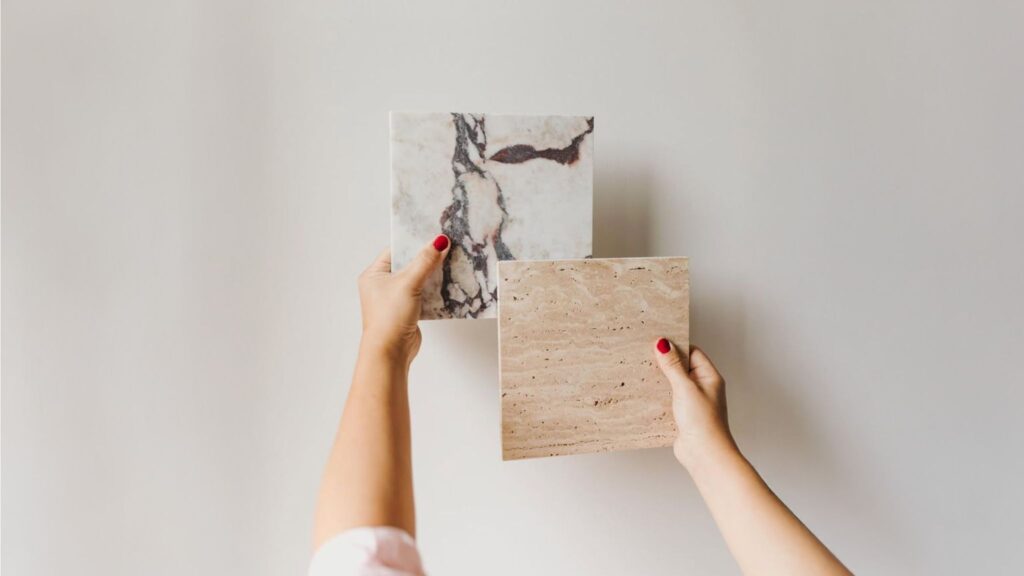
Unlike marble, which is a metamorphic rock (subjected to high pressures), travertine has a more fibrous structure and a colour palette ranging from cream and beige to walnut and earth tones.
Physical properties that make it unique
Controlled porosity: Its natural voids are not just decorative; they allow the stone to “breathe”.
Thermal resistance: It is one of the materials that absorbs the least heat in direct sunlight.
Durability: Resistant to freeze-thaw cycles and to compression.
Cutting versatility: It can be cut vein-cut (along the vein) or cross-cut (across the vein), giving two completely different visual looks.
If you are looking for a material that combines strength and warmth, we invite you to explore our range of high-quality travertine.
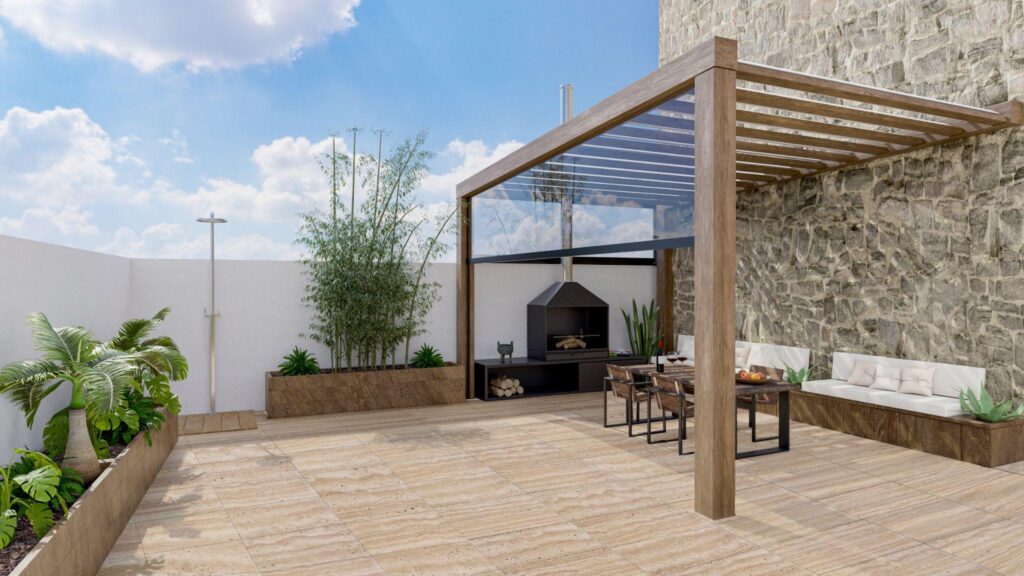
Travertine outdoors: why is it the best choice?
When we design a terrace, a garden or a pool surround, the chosen material must meet very specific safety and durability requirements. Travertine stands out over ceramic and concrete for several reasons:
1. Naturally slip-resistant surface
In its tumbled or honed finish, travertine offers an excellent coefficient of friction. Even when wet, its porous texture provides a natural grip, which makes it the gold standard for pool floors and wet areas.
2. Thermal comfort (the “cool feet” effect)
Unlike composite decking or dark porcelain tiles, which can burn the soles of the feet in summer, travertine stays at a pleasant temperature. This is vital in residential projects in very sunny areas.
3. Organic, evolving aesthetics
Travertine does not “age” in the negative sense; over time it acquires a patina that enhances its noble character. Its ability to blend with vegetation and water is also unmatched.
Travertine technical data sheet (average values)
For architects and builders, understanding technical behaviour is crucial. Here is an indicative technical data sheet for common travertine:
Property
Approximate value
Apparent density
2,400 – 2,500 kg/m³
Open porosity
3% – 10%
Compressive strength
50 – 60 MPa
Flexural strength
5 – 10 MPa
Frost resistance
High (suitable for outdoor use)
Abrasion resistance
Medium-high
Note: Values may vary depending on the quarry and the specific variety (Olivillo, Vallanca, Romano, etc.).
Most in-demand travertine varieties
Travertino Romano
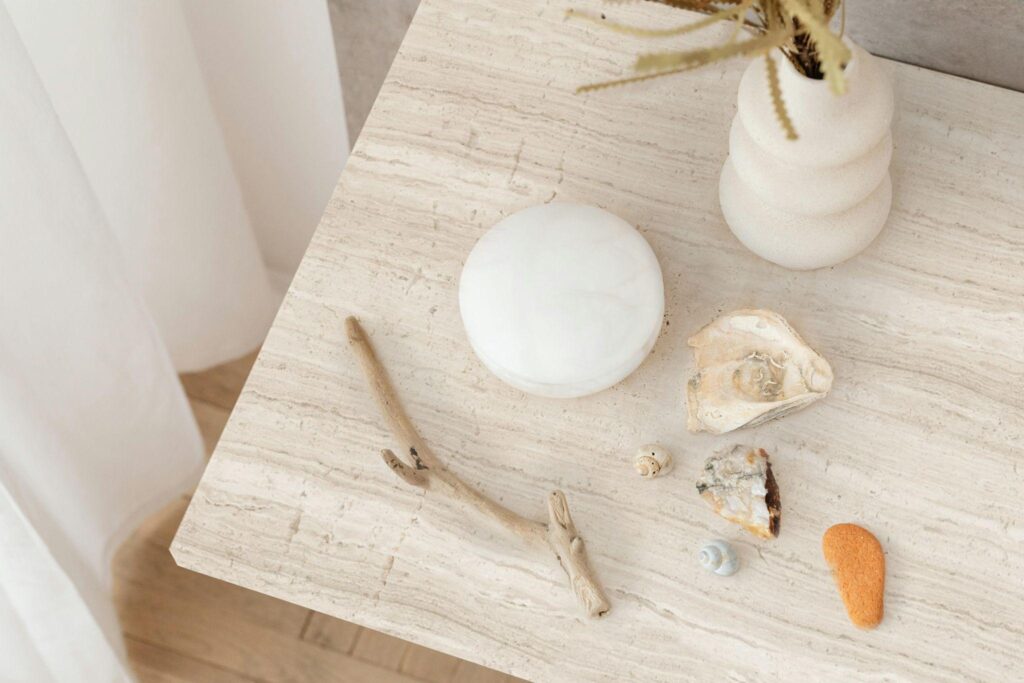
The classic par excellence. Light cream in colour with very linear veining when vein-cut. It is the image of classical architecture and timeless luxury.
Travertino Silk
Highly prized for its tonal softness and elegant finish, it has a palette of neutral, silky colours that bring brightness and balance.
Travertino Silver and Titanium
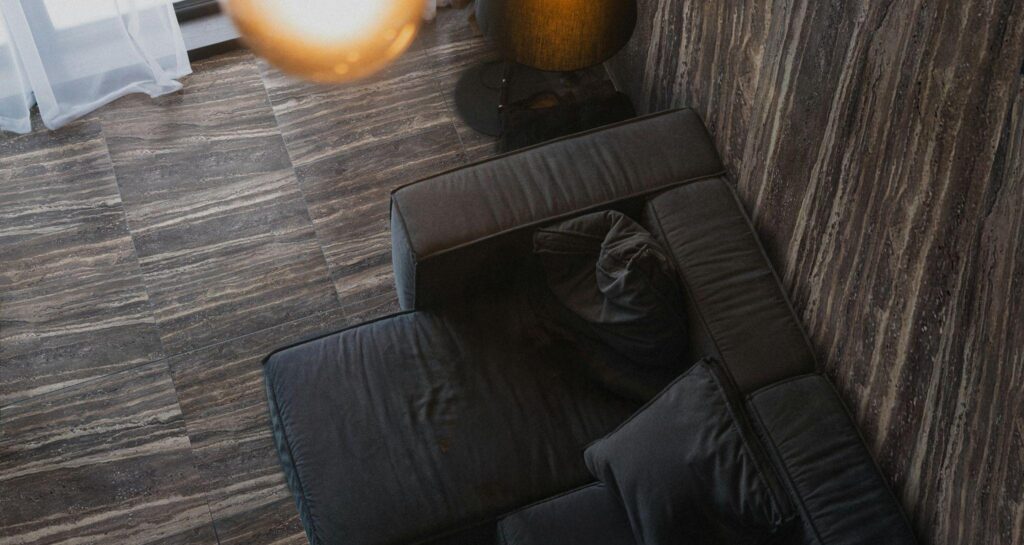
Varieties with a strong personality, dominated by grey tones and more intense contrasts. Silver has a more uniform, contemporary line, while Titanium adds depth and character with darker veining. They are commonly used in decorative designs, facades or features that call for greater visual impact.
Types of travertine finish
How the surface of the travertine is treated defines its final use:
Open-pore: The stone is left exactly as it comes from the quarry after cutting. It is the most natural and slip-resistant option for outdoors.
Filled-pore (resin-filled): The voids are filled with a special resin, either the same colour as the stone or clear. This makes cleaning easier and is recommended for interiors (bathrooms, kitchens).
Polished: Only possible if the pores are filled. It gives a mirror shine, ideal for luxury cladding.
Tumbled: The stone is put through a vibration process that rounds its edges and softens its surface, imitating natural wear. It is the favourite for Mediterranean-style terraces.
Comparison: travertine vs. marble vs. porcelain
Feature
Travertine
Marble
Porcelain
Origin
100% natural
100% natural
Man-made
Thermal feel
Very cool
Cool
Variable heat
Repairability
High
High
None
Slipperiness
Very low (safe)
Medium
Varies by model
Uniqueness
Every piece is unique
Every piece is unique
Repeating patterns
Outdoor installation and maintenance
To ensure travertine looks impeccable for decades, certain guidelines should be followed:
Installation tips
It is essential to use white tile adhesives specific to natural stone to avoid staining through capillary action. Outdoors, we recommend leaving a minimum joint of 2-3 mm to absorb thermal expansion.
Cleaning and protection
Water-repellent treatment: Although travertine is hard-wearing, applying a water-repellent and fire-retardant protector will stop water and oil penetrating the pores, making it easier to clean food stains or acid rain marks.
Pressure washing: It can be cleaned with a pressure washer (such as a Kärcher), but take care not to focus too much on the filler, if it has any.
Neutral soaps: Avoid acidic products (lemon, vinegar) or chemical abrasives that can degrade the stone’s calcium carbonate.
Key maintenance: Travertine needs minimal care if it is properly sealed at installation. Annual maintenance with neutral products is enough to preserve its beauty for decades.
Travertine as a sustainable design element
In the era of eco-responsible construction, travertine stands out as a material with a minimal carbon footprint. It requires no complex chemical processes to produce, and its durability reduces the need for replacement in the long term. At the end of its useful life, it is a fully biodegradable and recyclable material.
Its thermal inertia also contributes to the energy efficiency of buildings, keeping interiors cooler in summer and reducing the need for air conditioning.
Why choose Pulycort travertine?
At Pulycort, we understand that every project is different. We don’t just supply the stone; we advise our customers on the type of cut (vein-cut or cross-cut) and the finish that will work best in their specific location.
Our proximity to the extraction centres and our state-of-the-art cutting technology allow us to offer custom formats: from standard tiles to large slabs for ventilated facades or special pieces for pool coping (rounded edges).
Advantages of buying from Pulycort
✓ Quality control: We inspect every slab to ensure consistency of tone.
✓ Made-to-measure formats: We work to your architect’s drawings.
✓ Expert advice: More than 30 years working with natural stone.
Conclusion: the beauty of imperfection
Travertine is proof that nature is the best architect. Its irregularities, its pores and its colour variations are not defects but the fingerprints of the earth, giving every home a nobility no synthetic material can imitate.
If you are looking for an outdoor space that conveys peace and elegance and withstands the passing of time with dignity, travertine is your best ally.
🛒 Make your project a reality with the finest travertine
Are you looking for the ideal paving for your terrace or pool? At Pulycort we have the perfect solution to suit your budget and style.
To provide the best experiences, we use technologies like cookies to store and/or access device information. Consenting to these technologies will allow us to process data such as browsing behavior or unique IDs on this site. Not consenting or withdrawing consent may adversely affect certain features and functions.
Functional
Always active
The technical storage or access is strictly necessary for the legitimate purpose of enabling the use of a specific service explicitly requested by the subscriber or user, or for the sole purpose of carrying out the transmission of a communication over an electronic communications network.
Preferences
The technical storage or access is necessary for the legitimate purpose of storing preferences that are not requested by the subscriber or user.
Statistics
The technical storage or access that is used exclusively for statistical purposes.The technical storage or access that is used exclusively for anonymous statistical purposes. Without a subpoena, voluntary compliance on the part of your Internet Service Provider, or additional records from a third party, information stored or retrieved for this purpose alone cannot usually be used to identify you.
Marketing
The technical storage or access is required to create user profiles to send advertising, or to track the user on a website or across several websites for similar marketing purposes.